
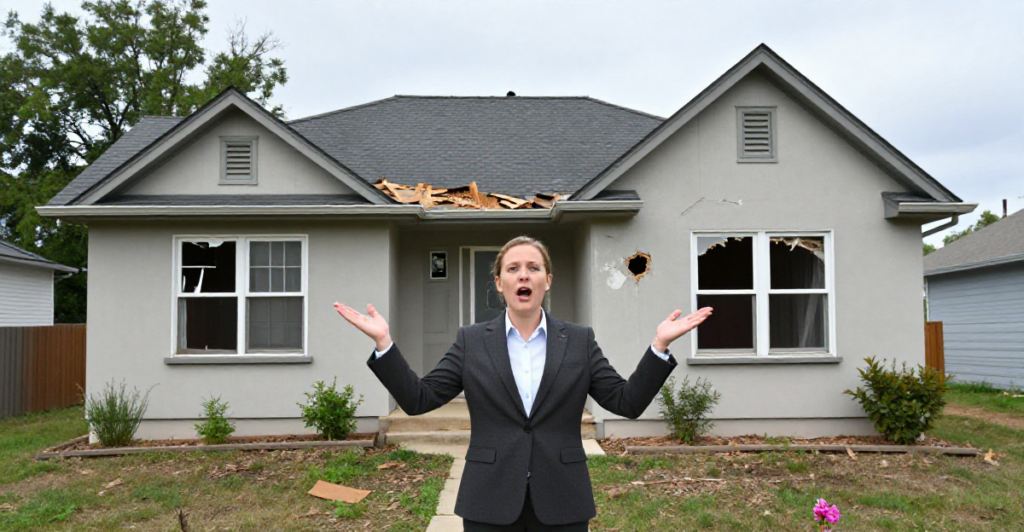
Fixer-uppers attract investors because they offer the potential to create value. However, not every distressed property becomes a profitable investment.
## Start With the End in Mind
Before evaluating renovation costs, investors should understand the likely exit strategy.
Will the property be flipped? Held as a rental? Used as a BRRRR project?
The answer influences renovation decisions, budget expectations, and return projections.
## Identify Cosmetic vs. Structural Problems
Cosmetic issues are generally easier to estimate and manage. Paint, flooring, fixtures, landscaping, and kitchen updates are relatively predictable.
Structural issues, foundation problems, drainage concerns, roof failures, and major system replacements can dramatically change a project’s economics.
## Create Multiple Budgets
Many experienced investors prepare best-case, expected-case, and worst-case renovation budgets.
This approach helps account for surprises that inevitably arise during construction.
## Analyze the Numbers Objectively
A great-looking project can still be a poor investment if the numbers don’t work.
Always estimate holding costs, financing expenses, repair costs, resale costs, and contingency reserves.
My Property Analyzer can help evaluate these scenarios before making an offer:
https://ChristopherAdams.com/analyze
Successful investors don’t buy every fixer-upper they find. They buy the ones that make financial sense.
If you’re looking for investment properties, off-market opportunities, fixer-uppers, or rental properties in Georgia, I’d be happy to help. If you own property and would like a free Comparative Market Analysis, visit:
https://christopheradams.com/cma
Questions? Email me at chris.adams@kw.com
Christopher Adams, Realtor®
Cell: 912-661-2079
chris.adams@kw.com
Keller Williams Realty Coastal Area Partners
Brokerage Phone: 912-356-5001